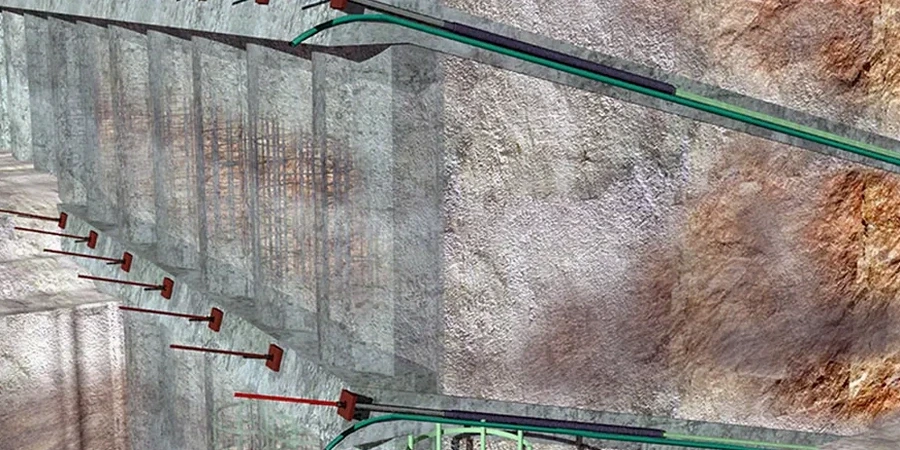
Across Wichita, many foundation excavations hit the Wellington Formation sooner than expected—layered shale and limestone that shifts in competence block by block. Designing a tieback that holds in this geology is not a catalog exercise. Our approach to active/passive anchor design starts with site-specific load transfer analysis, factoring in the local overconsolidation history and occasional gypsum lenses that can soften under sustained tension. For deeper cuts near the Arkansas River, where alluvial sands dominate, we often integrate findings from a CPT test to refine the bond zone profile before fixing the free length. The goal is not just to meet the IBC’s minimum safety factors, but to produce an anchor system that performs predictably through seasonal moisture cycles and the region’s freeze-thaw dynamics.
In Wichita’s Wellington Formation, an anchor’s bond strength can vary 40% across a single excavation face—local grouting protocols make the difference.