GEOTECHNICAL ENGINEERING
WICHITA
HomeSlopes & WallsRetaining wall design

Retaining Wall Design in Wichita: Geotechnical Reality vs. Standard Plans

Rigorous testing. Clear reporting.

LEARN MORE

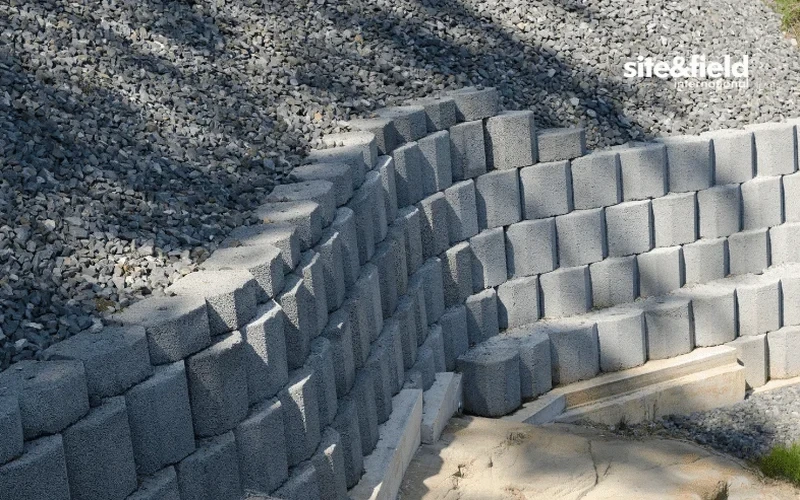
The biggest mistake we see in Wichita is treating a retaining wall over four feet like a garden terrace. A contractor pours a standard block wall, skips the subsurface investigation, and eighteen months later the wall is leaning toward the Arkansas River like it wants a drink. The problem is rarely the concrete mix; it's the backfill swelling behind it. Wichita sits on fat clays with PI values routinely exceeding 35, and when those soils get wet, the lateral pressure skyrockets past what any off-the-shelf design assumed. We get called after the cracks appear. Our preference is to get involved before the excavator arrives, running the lab tests that feed real earth pressure coefficients into the wall geometry. A proper slope stability analysis often becomes essential when the wall is cut into an existing grade, because the failure surface doesn't always start at the footing.

A retaining wall in Wichita clay fails from the backfill side first—drainage design and swell pressure determination matter more than concrete strength.
Our service areas

Our approach and scope

At 1,300 feet above sea level, Wichita's gently rolling terrain hides some of the most aggressive expansive soils in the central Plains. The city averages 34 inches of rain per year, and the wet-dry cycling penetrates three to six feet into the active zone, exactly the depth where most retaining wall backfill sits. We design for that moisture fluctuation by measuring the soil's swelling pressure in the lab and factoring it into the lateral load calculation—something a textbook Rankine analysis won't do on its own. A typical cantilever wall in these clays needs a heel length at least 60% of the stem height just to resist sliding, and we often specify a granular chimney drain wrapped in non-woven geotextile to keep the clay fines from migrating. For taller walls exceeding twelve feet, we evaluate mechanically stabilized earth options with geogrid reinforcement, pulling design parameters directly from our own pullout tests rather than manufacturer default values.
Retaining Wall Design in Wichita: Geotechnical Reality vs. Standard Plans
Technical reference — Wichita

Local considerations

The soil profile changes dramatically within a few miles. Over in College Hill near the older river terraces, you'll find stiff lean clays that stand nearly vertical for weeks during excavation. Drive ten minutes west toward the Big Ditch and you hit loose alluvial silts with sand lenses that slough into the trench before you can set the formwork. That contrast kills generic retaining wall designs. A wall engineered for College Hill clay backfill will be dangerously under-designed in the looser western deposits, where the active wedge is heavier and groundwater appears at eight feet instead of twenty. We run consolidated-undrained triaxial tests on Shelby tube samples from the exact wall alignment to determine whether the failure envelope supports the assumed friction angle. In the sandy lenses near the floodplain, liquefaction potential also enters the conversation, though that's more relevant for taller MSE structures than for residential basement walls.

Need a geotechnical assessment?

Reply within 24h.

Email: [email protected]

Reference standards

IBC 2021 Chapter 18 (Soils and Foundations), ASCE 7-22 Minimum Design Loads (Lateral Earth Pressure), ASTM D1586 Standard Test Method for SPT, ASTM D2487 Unified Soil Classification System, FHWA GEC No. 2 Earth Retaining Structures

Typical values

ParameterTypical value
Active earth pressure coefficient (Ka)0.28 – 0.35 (granular backfill)
At-rest earth pressure coefficient (K0)0.50 – 0.65 (clay backfill)
Drained friction angle (Φ')24° – 32° (site-specific)
Swelling pressure (Ps)1.5 – 4.2 ksf (fat clay)
Undrained shear strength (Su)800 – 2,200 psf
Design groundwater depth8 – 22 ft below grade
Minimum heel/stem ratio (cantilever)0.55 – 0.70

Frequently asked questions

What is the typical cost range for a retaining wall design in Wichita?

Retaining wall design costs in Wichita typically range from US$1,140 to US$4,700 depending on wall height, length, and the complexity of the subsurface conditions. A basic residential wall under six feet with straightforward soil profiles falls on the lower end, while a commercial MSE wall over twelve feet with complex groundwater issues and tiered geometry moves toward the upper end.

Does Wichita require a geotechnical report for retaining walls?

Yes. The City of Wichita and Sedgwick County generally require a geotechnical investigation for retaining walls over four feet in height, or any wall supporting a surcharge. The report must include soil classification per ASTM D2487, groundwater observations, and design parameters for lateral earth pressure and bearing capacity, consistent with IBC Chapter 18.

How do expansive clays affect retaining wall design?

Expansive clays like those common in Wichita can generate swelling pressures exceeding 4 ksf when wetted. If the backfill consists of onsite clay, that pressure adds to the lateral earth load and can cause wall rotation or stem cracking. We address this by specifying imported granular backfill, designing solid drainage systems, and sometimes increasing the wall embedment to resist the additional overturning moment.

What is the difference between a cantilever wall and an MSE wall for Wichita soils?

A cantilever wall resists lateral loads through its own weight and the weight of soil on the heel slab, working best for heights up to about 15 feet in competent bearing soils. An MSE wall uses geogrid reinforcement layers within the backfill to create a coherent reinforced soil mass, which performs well in Wichita's sandy alluvial deposits but requires careful drainage design in clay zones to prevent pore pressure buildup behind the facing.

How long does a retaining wall design and investigation take?

From the initial site visit and drilling to the delivery of stamped design calculations and construction specifications, the process typically takes two to three weeks. The field investigation including borings or test pits is usually completed in one day, with laboratory testing requiring five to seven business days for triaxial and swell-consolidation results.

Location and service area

We serve projects in Wichita and surrounding areas.

View larger map