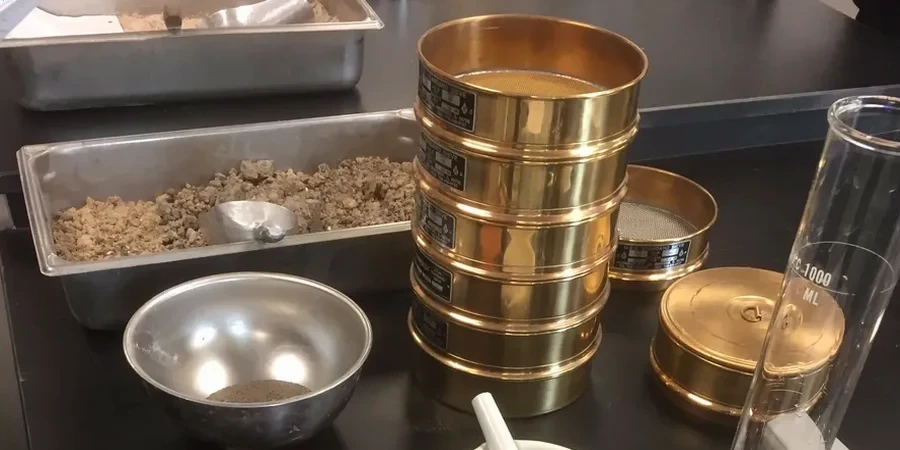
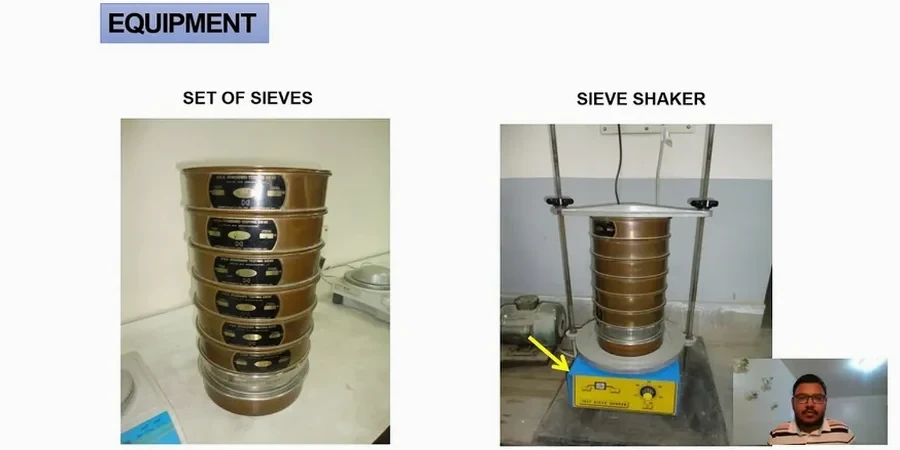
Wichita's soil profile changes drastically within half a mile. You start with sandy loam near the Arkansas River, then hit fat clays in the old floodplain, and suddenly there's weathered shale at five feet depth. That variability is exactly why a standard Proctor or Atterberg test alone won't cut it. A full grain size analysis (sieve + hydrometer) tells you the complete gradation curve, from the gravel fraction down to the clay-size particles that control drainage and shrink-swell behavior. Our team runs both ASTM D6913 for the coarse fraction and ASTM D7928 for the fines, giving you the full distribution engineers need for classification under the Unified Soil Classification System. When a footing design or pavement section depends on knowing whether you have well-graded sand or gap-graded silt, this combined approach eliminates guesswork. We process samples in our accredited lab and deliver results typically within three business days for standard turnaround.
A gradation curve without the hydrometer fraction is like a map with the bottom third torn off: fine for gravel but useless for clay.