GEOTECHNICAL ENGINEERING
WICHITA
HomeInvestigationSPT (Standard Penetration Test)

Standard Penetration Testing (SPT) in Wichita — Reliable Subsurface Data for Your Project

Rigorous testing. Clear reporting.

LEARN MORE

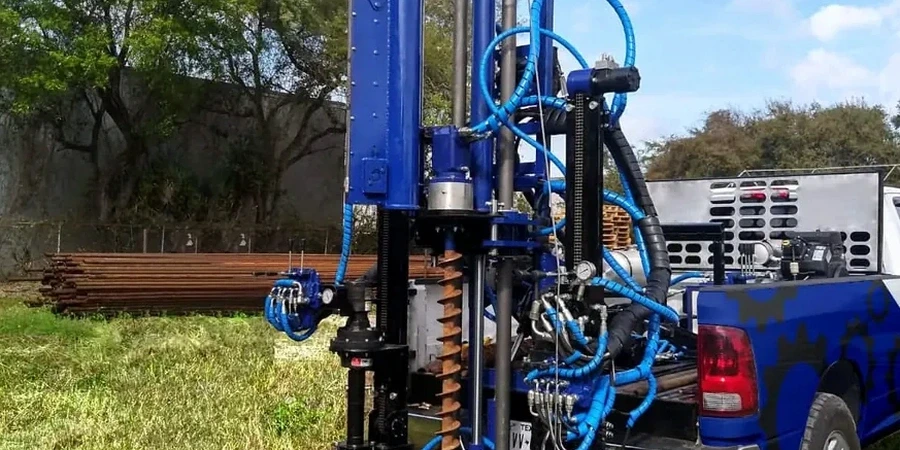
Wichita’s subsurface tells two very different stories depending on where you break ground. East of I-135, near the Arkansas River, you’re likely to encounter soft alluvial silts and loose sands that barely registered 4 blows per foot in recent Delano District projects. Move west toward the Wellington Formation shale bedrock and refusal can come before 18 inches. That contrast is exactly why a well-executed Standard Penetration Test matters here. The SPT remains the most widely specified in-situ test across Kansas because it pairs a split-spoon sampler with a 140-pound hammer dropped from 30 inches, recording N-values that correlate directly with bearing capacity and liquefaction susceptibility. When we mobilize a CME-75 rig to your site, the goal is data you can hand directly to your structural engineer. For deep foundation design in variable stratigraphy, many Wichita contractors also request a pile load test to validate capacity assumptions derived from SPT blow counts, closing the loop between exploration and performance.

An SPT N-value below 8 in Wichita’s river corridor signals potential liquefaction under seismic loading — a finding that often triggers ground improvement before structural design begins.
Our service areas

Our approach and scope

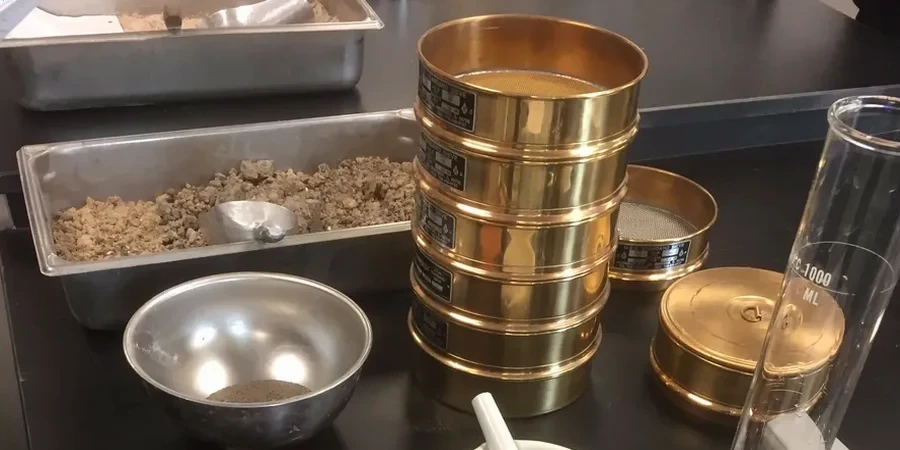
A six-story mixed-use project near Century II required borings to 55 feet because the upper 20 feet showed erratic sand lenses within stiff clay. Our crew logged every spoon recovery per ASTM D1586, noting the transition from N-values of 9 in the upper silts to N=38 in the underlying shale. That jump changed the foundation recommendation from mat to spread footings, saving the developer roughly 20% on concrete. The SPT procedure we follow is methodical: drive the sampler 18 inches in three 6-inch increments, discard the seating drive, and sum the final two intervals for the N-value. Soil samples captured in the split spoon go straight to our lab for grain size analysis and Atterberg limits, giving you a complete geotechnical index profile from a single boring. On sites with deep sand deposits near the river, combining SPT data with a CPT sounding yields continuous stratigraphy where the hammer alone misses thin compressible seams.
Standard Penetration Testing (SPT) in Wichita — Reliable Subsurface Data for Your Project
Technical reference — Wichita

Local considerations

The 2024 International Building Code (IBC), adopted by Sedgwick County with local amendments, requires site-specific geotechnical investigation for any structure classified as Risk Category II or higher. Wichita lies in Seismic Design Category B per ASCE 7-22, but the alluvial deposits along the Arkansas River and its tributaries are exactly the kind of loose saturated soils where cyclic mobility becomes a concern even at moderate ground accelerations. Skipping the SPT or relying on presumptive bearing values from the county soil survey exposes your project to differential settlement risks that are entirely avoidable. We’ve seen warehouse slabs in south Wichita crack within two years when footings were placed on undocumented fill without blow count verification. A proper SPT program, supplemented with liquefaction screening when the water table is within 15 feet of grade, gives your design team the data to either proceed confidently or specify mitigation measures before concrete is poured.

Need a geotechnical assessment?

Reply within 24h.

Email: [email protected]

Reference standards

ASTM D1586-18: Standard Test Method for Standard Penetration Test (SPT) and Split-Barrel Sampling of Soils, ASTM D2487-17: Standard Practice for Classification of Soils for Engineering Purposes (Unified Soil Classification System), ASCE 7-22: Minimum Design Loads and Associated Criteria for Buildings and Other Structures, IBC 2024 (adopted by Sedgwick County): Chapter 18 — Soils and Foundations

Typical values

ParameterTypical value
Hammer typeSafety hammer, 140 lb (auto-trip)
Drop height30 inches
SamplerStandard split-spoon, 2" OD
Blow count recordingN-value (blows per 6" + 6")
Borehole diameter4 to 8 inches, rotary wash or hollow-stem auger
StandardASTM D1586-18
Typical depth range in Wichita15 to 80 ft below grade

Frequently asked questions

How much does an SPT boring program cost in Wichita?

For a typical single-family or light commercial project in Wichita, a two-boring SPT program with lab testing on select samples usually runs between US$500 and US$800 per boring, depending on depth, access conditions, and whether hollow-stem auger or rotary wash methods are needed. Deeper borings or sites with difficult access near the river corridor may push toward the upper end of that range.

How many SPT borings does the IBC require for my Wichita project?

The IBC does not prescribe an exact number — it requires a “sufficient number” of borings to characterize subsurface variability across the building footprint. In practice, Sedgwick County plan reviewers typically expect a minimum of two borings for residential structures and one boring per 2,500 square feet for commercial buildings, with additional borings where soil conditions change abruptly.

What depth do you typically drill SPT borings in Wichita?

Most borings in the Wichita area extend to 25–40 feet for shallow foundation projects, but sites near the Arkansas River or with planned deep foundations may require 60–80 feet to reach competent shale bedrock. We determine final depth in the field based on real-time N-value trends and refusal criteria.

Can SPT data tell me if my Wichita site has liquefaction risk?

Yes, SPT N-values are the primary input for simplified liquefaction evaluation procedures. When combined with groundwater depth and seismic design parameters from ASCE 7-22, the blow counts allow us to calculate the factor of safety against liquefaction for each soil layer — a critical analysis for any Wichita site within the Arkansas River alluvial corridor.

Location and service area

We serve projects in Wichita and surrounding areas.

View larger map