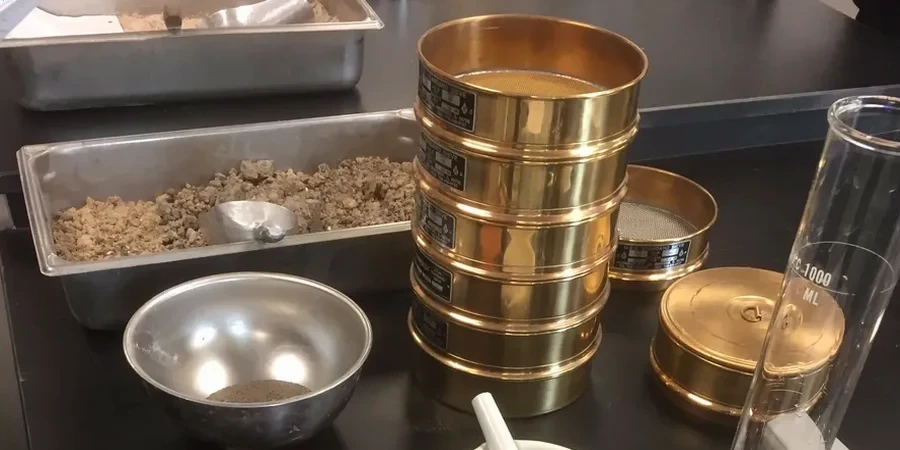
A five-story medical office building near the East Harry corridor was stalled because the geotechnical report didn't include a VS30 measurement. The city reviewer flagged it outright. Wichita sits on a mix of Permian shale, limestone, and deep alluvial deposits along the Arkansas River, and the transition from rock to sediment can happen within a single lot. Our crew runs active MASW with a 24-channel seismograph and a 10-pound sledge source, switching to passive arrays when we need to resolve deeper than 30 meters. For sites near the river, where soft clays and loose sands dominate, we often pair the survey with CPT testing to cross-check stratigraphy, and we run grain size analysis on nearby borings to validate the velocity profile against material type.
A 30-meter shear wave velocity profile in Wichita can shift your seismic design category from C to D and change your lateral base shear by over 35 percent.