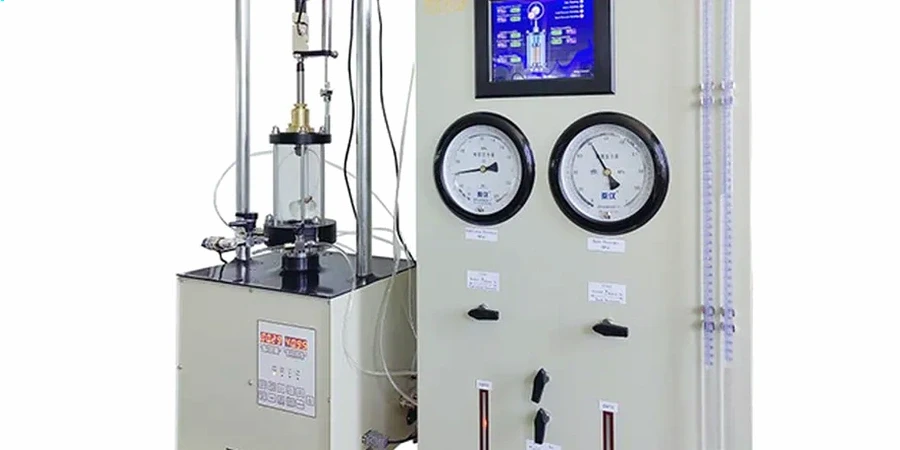
Beneath Wichita's surface, the Wellington Formation shales and Arkansas River alluvium create a complex two-layer geotechnical profile that standard penetration testing alone cannot resolve. The expansive clay shales at depths of 15 to 30 feet, overlaid by silty terrace deposits, behave differently under rapid loading versus sustained stress—a distinction critical for the city's growing industrial corridors and bridge replacements. A triaxial test isolates this behavior by consolidating an undisturbed specimen to in-situ stress conditions, then shearing it under controlled drainage to generate effective stress paths. For Wichita's U.S. 54 and I-235 interchange projects, these parameters directly inform bearing capacity and settlement predictions, replacing generic presumptive values that have historically led to underperformance in the region's moisture-sensitive subgrades.
Effective stress parameters from a properly consolidated triaxial test reduce foundation overdesign in Wichita's overconsolidated shales by 15 to 25 percent compared to total stress assumptions.