GEOTECHNICAL ENGINEERING
WICHITA
HomeFoundationsRaft/mat foundation design

Raft Mat Foundation Design in Wichita — Smarter Solutions for Expansive Soils

Rigorous testing. Clear reporting.

LEARN MORE

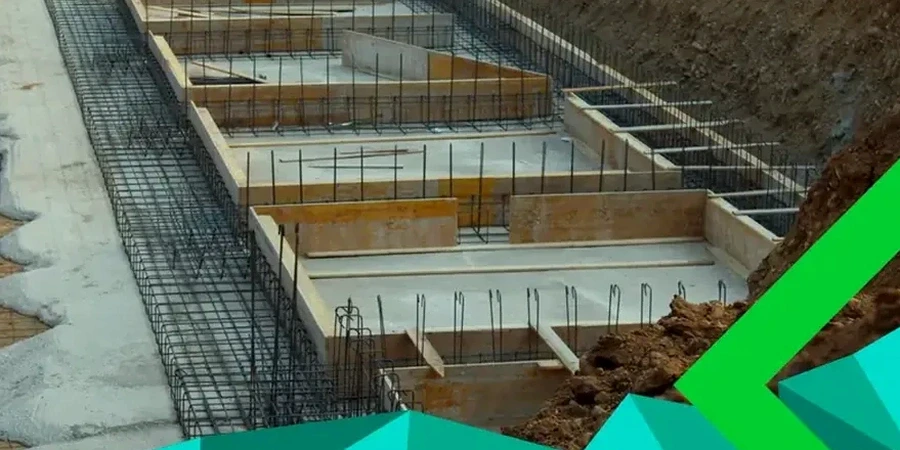
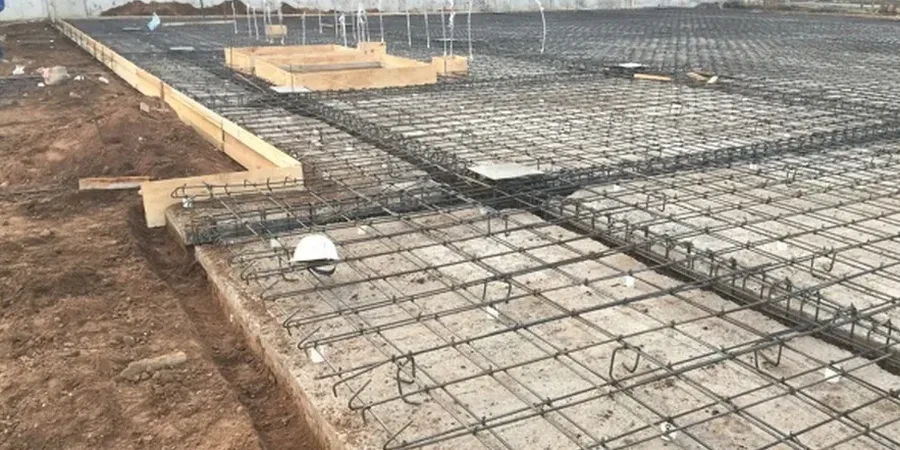
Wichita sits at 1,300 feet on a broad, flat plain underlain by the Wellington Formation — a Permian-age shale that weathers into notoriously fat, expansive clays. Over 390,000 people live atop these soils, and anyone who has worked foundations here knows the clay doesn’t just move; it heaves, shrinks, and cracks slabs that weren’t designed for the swell pressure. The 2014-2016 drought-then-deluge cycle wrecked dozens of lightly reinforced residential slabs across west-side subdivisions, proving that conventional spread footings aren’t always enough. A properly engineered raft mat foundation design distributes structural loads across the entire footprint, bridging soft spots and reducing differential movement to fractions of an inch. When we design a raft, we start with site-specific soil data — not generic county maps — because the same clay can act differently on two lots half a mile apart.

A raft foundation cuts differential settlement to under 0.5 inches when the same soil would move a spread footing four times that much.

Our service areas

Our approach and scope

IBC Chapter 18 and the Wichita-Sedgwick County Unified Building Code require a geotechnical investigation for any mat foundation supporting an irregular structure or a building over three stories, and frankly we apply the same rigor even to two-story residential if the soil report shows PI above 35. Our lab runs Atterberg limits per ASTM D4318 on every sample, because in Wichita the plasticity index is the tell — PI values between 30 and 55 are common in the Wellington-derived clays, and that’s the range where raft design shifts from optional to strongly recommended. We model the mat as a plate on elastic springs using the modulus of subgrade reaction derived from in-situ plate load data, not just correlations from SPT blow counts. This matters because local clay stiffness varies sharply with moisture content, and a raft designed on an assumed k-value without direct testing can end up twice as thick as needed — or dangerously thin. We also tie the design to the frost depth of 24 inches and the active zone depth, which in Sedgwick County runs about 8 to 12 feet depending on tree cover and irrigation history.
Raft Mat Foundation Design in Wichita — Smarter Solutions for Expansive Soils
Technical reference — Wichita

Local considerations

East Wichita near the Arkansas River floodplain is a different world from the west side’s residuum hills. East-side alluvium contains silt lenses and occasional sand stringers that drain unevenly; we’ve pulled cores where one half of the building pad is stiff lean clay and the other half is soft sandy silt — a recipe for angular distortion that cracks partition walls. Out west, the residual clay is more uniform in composition but highly reactive, with swell pressures measured in our lab exceeding 5,000 psf. If you build a raft over that without a moisture barrier and proper drainage, the edges curl during summer, and the center stays put — we call it the potato-chip effect. In both settings, the biggest risk isn’t total settlement but differential movement, and a raft mat foundation design addresses that by acting as a stiff diaphragm. We’ve also seen sites near old oil wells — there are hundreds of plugged wells across the county — where methane migration or subsidence over abandoned casings creates a whole extra layer of risk that a conventional footing simply ignores.

Need a geotechnical assessment?

Reply within 24h.

Email: [email protected]

Reference standards

IBC 2021 Chapter 18 — Soils and Foundations, ASCE 7-22 — Minimum Design Loads for Buildings, ASTM D4318 — Liquid Limit, Plastic Limit, Plasticity Index, ASTM D1586 — Standard Penetration Test (SPT), ASTM D2487 — Unified Soil Classification System, ACI 318-19 — Structural Concrete for Mat Foundations

Typical values

ParameterTypical value
Typical slab thickness (residential)10–14 in
Typical slab thickness (commercial)18–36 in
Subgrade modulus (k) range in local clay50–150 pci
Active zone depth (Sedgwick County)8–12 ft
Frost depth for design24 in
Soil plasticity index range (Wellington Formation)30–55
Reinforcement ratio typical range0.18–0.35% per face

Frequently asked questions

How much does raft mat foundation design cost for a Wichita project?

For a single-family residential raft, the geotechnical investigation and design package typically runs between US$1,060 and US$4,430, depending on lot size, number of borings, and whether we need consolidation or swell testing. Commercial projects with deeper borings and more complex modeling fall toward the upper end.

When is a raft foundation better than spread footings in Sedgwick County?

When the soil PI exceeds 30, or when the site has fill thicker than 3 feet, or when the structure has column loads over 150 kips on clay with an allowable bearing capacity below 2,000 psf. Also anytime you’re building on the east-side alluvium with its erratic silt seams — a raft bridges the variability that would force oversized footings.

What depth of soil exploration do you need for a mat foundation?

We extend borings to at least twice the mat width for buildings under 50 feet wide, and deeper for larger footprints. In Wichita, that usually means 30 to 40 feet, with continuous sampling through the active zone (top 12 feet) to capture moisture profiles and identify any buried sand lenses that could act as drains.

Can you design a raft foundation on expansive clay without removing the clay?

Yes, and we do it often. The raft is designed to float on the clay as a rigid body, with perimeter cutoff walls and a moisture-conditioned subgrade to stabilize the water content. We specify a 4-inch sand blanket and a vapor barrier directly beneath the slab to break capillary rise — that alone reduces edge curl by over 60 percent based on our monitoring data.

How long does the design and approval process take for a mat foundation in Wichita?

Fieldwork and lab testing take about 10 to 14 working days. The analysis and drawing package is another week. With the city’s current plan review turnaround running about 15 business days for structural submissions, you’re looking at five to six weeks from notice-to-proceed to stamped permit-ready drawings.

Location and service area

We serve projects in Wichita and surrounding areas. More info.

View larger map