GEOTECHNICAL ENGINEERING
WICHITA
HomeRoadwayFlexible pavement design

Flexible Pavement Design for Kansas Subgrade Conditions

Rigorous testing. Clear reporting.

LEARN MORE

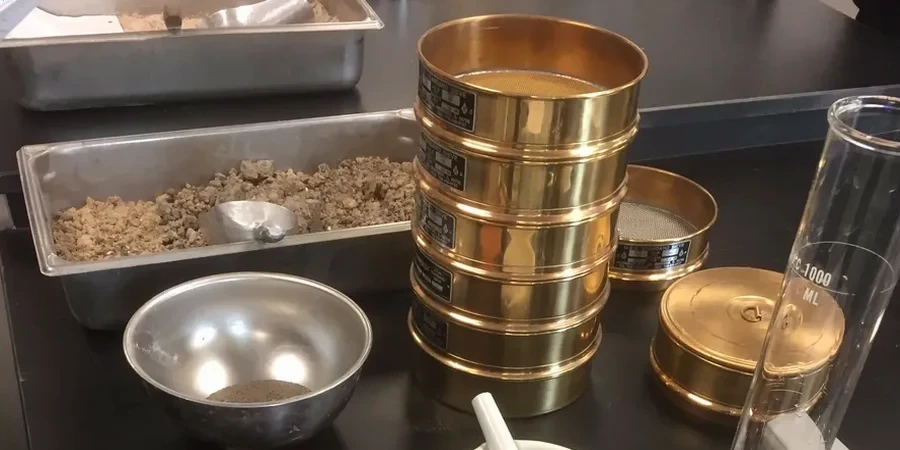
Flexible pavement design in Wichita demands more than a standard catalog section. The city’s underlying geology—predominantly the Wellington Formation with its expansive shale and clay layers—creates subgrade conditions that punish under-designed asphalt structures. We see it in the premature alligator cracking along Kellogg Avenue and the rutting that appears five years early on collector roads south of the Arkansas River. Our approach integrates the AASHTO 1993 design guide with Mechanistic-Empirical Pavement Design Guide (MEPDG) calibration specific to Kansas DOT historical performance data. Before any layer thickness calculation, we run a full geotechnical investigation: in-situ permeability testing quantifies drainage characteristics of the local silty clays, while grain-size analysis and Atterberg limits establish the soil classification per ASTM D2487. Wichita’s climate zone—hot summers with surface temperatures exceeding 130°F and winter freeze-thaw cycling—requires careful binder grade selection; we specify PG 64-22 or PG 70-22 depending on traffic loading and layer position, always referencing KDOT Standard Specifications for material acceptance.

A 1-inch increase in asphalt thickness on untreated expansive clay subgrade in Wichita adds 8–12 years to pavement life—the most cost-effective investment you can make before the first lift is paved.
Our service areas

Our approach and scope

With a population approaching 400,000 and an elevation of 1,300 feet above sea level, Wichita’s road network stretches across terrain where the water table fluctuates seasonally by several feet. This hydraulic movement directly impacts the resilient modulus of the subgrade—the single most influential parameter in flexible pavement performance. Our laboratory testing program quantifies this through repeated load triaxial tests on undisturbed Shelby tube samples, establishing Mr values that feed directly into the AASHTO structural number calculation. For commercial and industrial pavements subjected to heavy truck traffic, we often supplement the standard investigation with a plate-load test to verify in-situ modulus of the prepared subgrade and granular base layers, ensuring that compaction specs translate into actual stiffness. The design process then optimizes the asphalt concrete, base, and subbase thicknesses against three failure criteria: fatigue cracking from the bottom of the asphalt layer, rutting in the subgrade, and thermal cracking. We run the MEPDG software with local climate data from Wichita Eisenhower National Airport weather station, not generic regional files, because a 5°F difference in average annual temperature shifts predicted rutting by 15%. When subgrade stabilization is necessary, we evaluate lime treatment for the fat clays that dominate eastern Sedgwick County—a technique that chemically transforms expansive smectite minerals into non-expansive calcium silicates. The CBR road test provides a direct empirical correlation for designs where full AASHTO analysis isn’t warranted, though we typically combine CBR with mechanistic checks for municipal arterials.
Flexible Pavement Design for Kansas Subgrade Conditions
Technical reference — Wichita

Local considerations

We investigated a distribution center off I-235 where the parking lot showed 3-inch ruts after just two summers of truck traffic. The original design assumed a subgrade CBR of 6 based on a county soil survey map from 1974. Our borings revealed a 9-foot layer of high-plasticity clay with a soaked CBR of 2.1. The failure mechanism was classic: moisture migration from the pavement edges and through unsealed cracks saturated the subgrade, the resilient modulus collapsed, and the thin asphalt layer—designed for a modulus that never existed in the field—fatigued from the bottom up. We redesigned the pavement section with 8 inches of lime-stabilized subgrade extending 3 feet beyond the pavement edge, a 10-inch aggregate base, and 5 inches of Superpave asphalt. The structural number jumped from 3.8 to 5.4. The lesson from Wichita’s expansive clays is that pavement design must assume saturated conditions for the subgrade modulus, not the “optimum moisture” values that look good in a lab report but never hold in the field after the first wet spring.

Need a geotechnical assessment?

Reply within 24h.

Email: [email protected]

Reference standards

AASHTO Guide for Design of Pavement Structures (1993, with KDOT supplements), AASHTOWare Pavement ME Design (MEPDG, Kansas calibration factors), KDOT Standard Specifications for Road and Bridge Construction (current edition), ASTM D2487 (Unified Soil Classification System), ASTM D1883 / AASHTO T 193 (CBR test procedure), ASTM D4123 / AASHTO T 321 (resilient modulus of asphalt)

Typical values

ParameterTypical value
Design Traffic (ESALs)0.5 – 30 million (20-year design life)
Asphalt Concrete Thickness4 – 12 inches (varies by traffic class)
Aggregate Base (AB-3) Thickness6 – 12 inches (KDOT gradation)
Subgrade Resilient Modulus (Mr)5,000 – 15,000 psi (untreated Wichita clay)
Structural Number (SN)2.5 – 6.5 (calculated per layer coefficients)
Design MethodAASHTO 93 + MEPDG (Kansas calibration)
Binder PG GradePG 64-22 / PG 70-22 (KDOT spec)

Frequently asked questions

What is the typical cost range for a flexible pavement design in Wichita?

The design package for a commercial or municipal flexible pavement in Wichita—including subgrade investigation, laboratory testing, AASHTO/MEPDG analysis, and final pavement section recommendations—ranges from US$1,570 to US$5,520, depending on the number of borings, traffic data complexity, and whether lime stabilization mix designs are required.

Why do flexible pavements in Wichita fail earlier than the design life?

The primary cause is subgrade moisture accumulation in the expansive clays of the Wellington Formation. When edge drains are omitted or the water table rises seasonally, the resilient modulus drops dramatically. A design that used a laboratory Mr value at optimum moisture can over-predict pavement life by 50% or more. We always use soaked or “as-compacted at equilibrium” moisture conditions for the subgrade modulus input.

How does the MEPDG differ from the AASHTO 93 method for Wichita projects?

The AASHTO 93 method uses a single empirical equation based on the 1958–1960 AASHO Road Test in Ottawa, Illinois—different climate, different subgrade. MEPDG uses mechanistic response models (stresses, strains) combined with local climate and traffic data to predict distresses like rutting and cracking year by year. For Wichita, the Kansas DOT has developed local calibration coefficients that account for our hot summers, freeze-thaw cycles, and expansive clays, making MEPDG the preferred method for high-volume roads.

What subgrade preparation is recommended for flexible pavement on Wichita’s expansive clays?

For high-plasticity clays (PI above 25), we typically specify lime stabilization of the upper 8 to 12 inches of subgrade at 4–6% quicklime by dry weight, extending 2–3 feet beyond the pavement edge. This chemically modifies the clay minerals, reduces swell potential below 0.5%, and creates a working platform with a CBR of 20 or higher. The stabilized layer also acts as a moisture barrier protecting the untreated subgrade below.

Location and service area

We serve projects in Wichita and surrounding areas.

View larger map