GEOTECHNICAL ENGINEERING
WICHITA

Geotechnical Engineering in Wichita

Rigorous testing. Clear reporting.

LEARN MORE

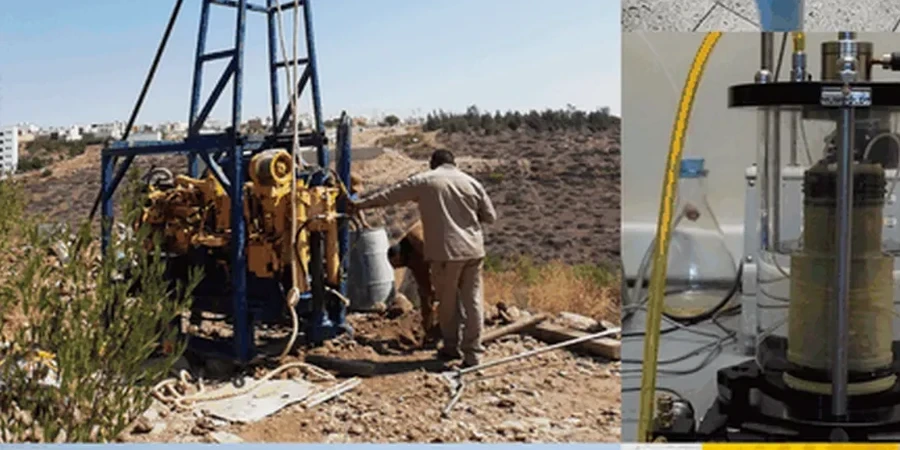
In Wichita, we often see that the real complexity isn't the structure above ground but what's happening a few feet below. The city sits over Permian shale and limestone, with layered alluvial deposits from the Arkansas River and its tributaries cutting through the west side. That means a site on the east side over Wellington Formation rock behaves nothing like a site near the Big Ditch on silt and clay lenses. A soil mechanics study here has to start with that geological split. We run laboratory triaxial and consolidation tests on Shelby tube samples, paired with SPT field data, to build a constitutive picture that holds up under IBC Chapter 18 requirements. When the water table is shallow—common in the floodplain south of Kellogg—we also integrate in-situ permeability testing early so drainage design isn't an afterthought.

A soil mechanics study in Wichita has to distinguish Permian bedrock from recent Arkansas River alluvium—the two behave under load in fundamentally different ways.
Geotechnical Engineering in Wichita
Technical reference — Wichita

Our service areas

Local geology

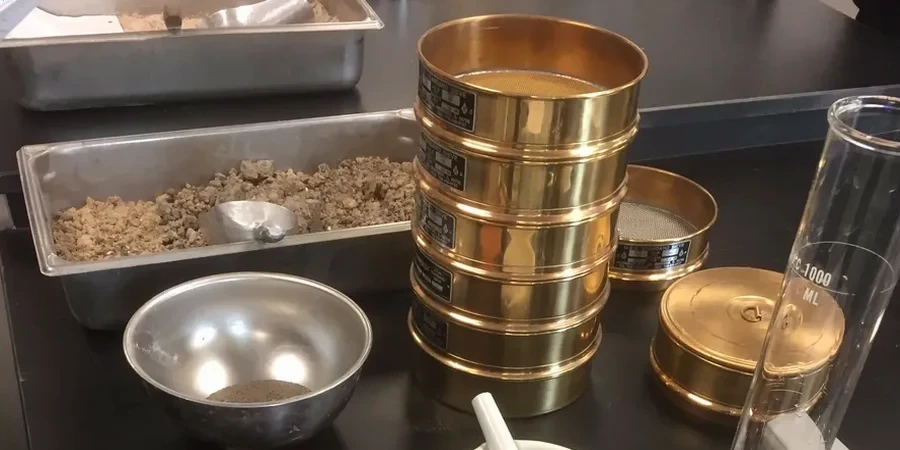
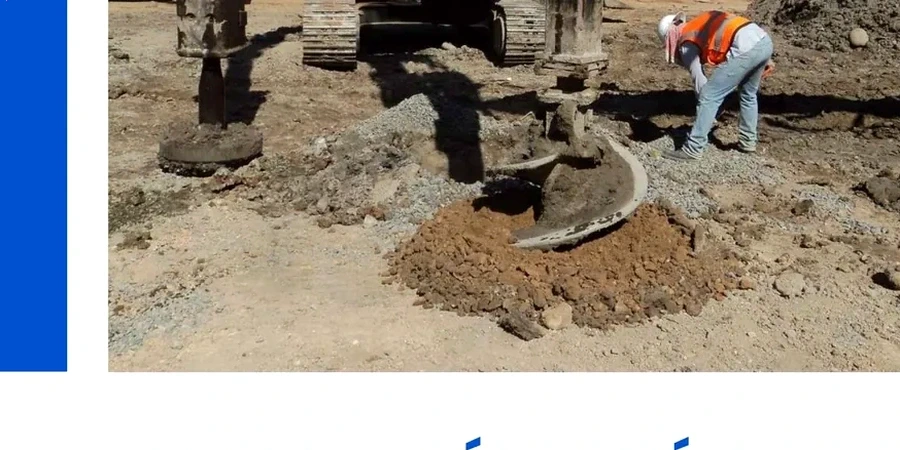
Wichita's development history left a patchwork of fill conditions that still surprise engineers. The downtown corridor was rebuilt multiple times since the 1880s, and old basements, brick rubble, and forgotten utility trenches lie compacted under modern streets. Our soil mechanics study workflow accounts for that: we start with a desktop review of historical Sanborn maps, then drill through the fill to reach native material. The lab phase runs grain size distributions per ASTM D6913 on every representative stratum, and we cross-check plasticity against the Casagrande chart to flag expansive clay seams that show up unpredictably in the Wellington Formation. For projects near the river, we often recommend a CPT test transect to capture continuous tip resistance and pore pressure profiles, which helps separate natural levee deposits from backswamp clays without the disturbance of sampling.

Reference standards

ASTM D1586 – Standard Test Method for SPT and Split-Barrel Sampling, ASTM D2487 – Unified Soil Classification System, ASTM D4767 – Consolidated Undrained Triaxial Compression Test, IBC Chapter 18 – Soils and Foundations, ASCE 7 – Minimum Design Loads for Buildings and Other Structures

Need a geotechnical assessment?

Reply within 24h.

Email: [email protected]

Video overview

Why choose us

ASCE 7 and IBC Chapter 18 set the minimum, but in Wichita the real risk is differential settlement where cut-and-fill transitions cross a building footprint. We've seen it repeatedly in commercial pads along the I-235 corridor: one corner sits on stiff shale, the opposite corner on ten feet of undocumented fill. A soil mechanics study that only tests the native material misses the fill compressibility entirely. Our approach mandates sampling at every change in stratum, with consolidation curves run on the weakest layer. For sites east of Rock Road where the Wellington Formation outcrops, we also screen for sulfate content—sulfate attack on concrete foundations has been documented locally and can be mitigated with Type V cement if caught early.

Typical values

ParameterTypical value
Sampling method (cohesive)Shelby tube, ASTM D1587
Sampling method (granular)SPT split spoon, ASTM D1586
Grain size analysisSieve + hydrometer, ASTM D6913/D7928
Atterberg limitsASTM D4318
Unconfined compressionASTM D2166
Consolidation (oedometer)ASTM D2435
Triaxial shear (CU/CD)ASTM D4767 / D7181
Moisture-density (Proctor)ASTM D698 / D1557

Frequently asked questions

What does a soil mechanics study in Wichita typically cost for a single-family residential lot?

For a standard residential lot with one boring to 20–25 feet, lab testing on two or three samples, and a signed engineering report, the cost generally falls between US$3,380 and US$4,480. The spread depends on access conditions, whether we hit fill that requires deeper drilling, and the number of consolidation or shear tests the structural engineer requests.

How deep do you drill for a soil mechanics study on a commercial building in Wichita?

Depth is governed by the stress bulb of the proposed foundation. Under IBC Chapter 18, borings must extend to a depth where the net stress increase is less than 10 percent of the effective overburden. In practice, for a two- to three-story steel frame on spread footings in the Arkansas River corridor, that often means 30 to 40 feet. We confirm refusal or competent bedrock earlier when the Wellington Formation is shallow.

How long does it take to get the final soil mechanics report after drilling?

Drilling and sampling are typically completed in one to two days. Laboratory testing takes seven to ten business days for standard parameters—consolidation and triaxial tests add a few days because of saturation and shearing time requirements. The geotechnical report with bearing capacity, settlement estimates, and pavement recommendations is delivered within two weeks of field work for most Wichita projects.

Location and service area

We serve projects in Wichita and surrounding areas.

View larger map